The Hectre · 2026
Building a housing marketplace around people, not properties
Co-founder and design engineer. I shape the product from strategy and matching to the design system, and build the flows myself. Early private beta; mobile app in development.
- beta sign-ups
- 500+
- beta sign-ups
- agents onboarded
- 20+
- agents onboarded
- led to a viewing
- 45%
- led to a viewing
- markets
- 2
- markets
The problem
Finding a home is a trust problem first
Moving is a chain of jobs: find a roommate, find an agent, find a home, book viewings, secure it, furnish it, move in. Each step happens on a different channel, held together by screenshots, referrals and a lot of trust. My co-founder and I saw the same pattern in two markets.
In the UK, landlords are more likely to ask for a guarantor from people moving from overseas or renting for the first time. In Lagos, unregistered agents far outnumber the roughly 1,000 registered ones, and real estate is among the top five consumer complaints in the state.
Different markets, same root problem: trust has nowhere to live. Our goal is to help people moving somewhere new find housemates and a home they can trust.
The market
Three signals before we committed
- What renters told us. People moving somewhere new couldn’t answer basic questions at any step. Is this agent real? Is this listing real? Who will I actually live with?
- What already exists. Listing sites own inventory; roommate searches live in unverified WhatsApp and Facebook groups. Nobody owns the people side.
- How big it is. Lagos needs about 500,000 new homes a year and delivers fewer than 20,000. England has about 4.6 million privately renting households and, in 2018, an estimated 497,000 shared houses.
The bet
People first, then homes
We chose the third, then widened it. Compatibility comes first, then homes, then move-in, but the same product also serves people who just want a home, and people who have a room and need someone to fill it. Three intents, one trust layer.
A match needs to mean something
People build their profile around what matters when sharing a home: routines, budget, area, how they live. The Hectre uses those signals to find who fits, and every match shows why it scored the way it did, so a percentage is never just a number.
AI as a connective layer
Once you know who you might live with, you need a place that works for both of you. Instead of two people searching in isolation and comparing screenshots, I designed and built an AI co-search that weighs both people’s preferences and finds homes that fit the pair.
When housing is the priority
Not everyone needs a roommate. For people who just want a place, I designed and engineered a home search that learns their taste, with every listing showing who says it’s available, and when they last confirmed it.
What the beta is teaching us
Trust, not inventory, is the product
We’re in an early private beta with 500+ renters and 20+ agents. Two lessons so far:
- People don’t need more listings. They need to know they can trust what they’re looking at.
- It can’t only be software. We onboard homeowners and agents in person, have them list homes that are genuinely available, and check that status often.
What we’re still working out
- Matching needs density. It only works with enough people in one place, so we match in person first and build a real community before asking an algorithm to do the work.
- How much verification people will accept. More checks build trust, but every step is a chance to drop off. The beta shows people share about as much as they expect to see from the other side, so verification works best when it feels mutual, not like a gate.
Next: the marketplace
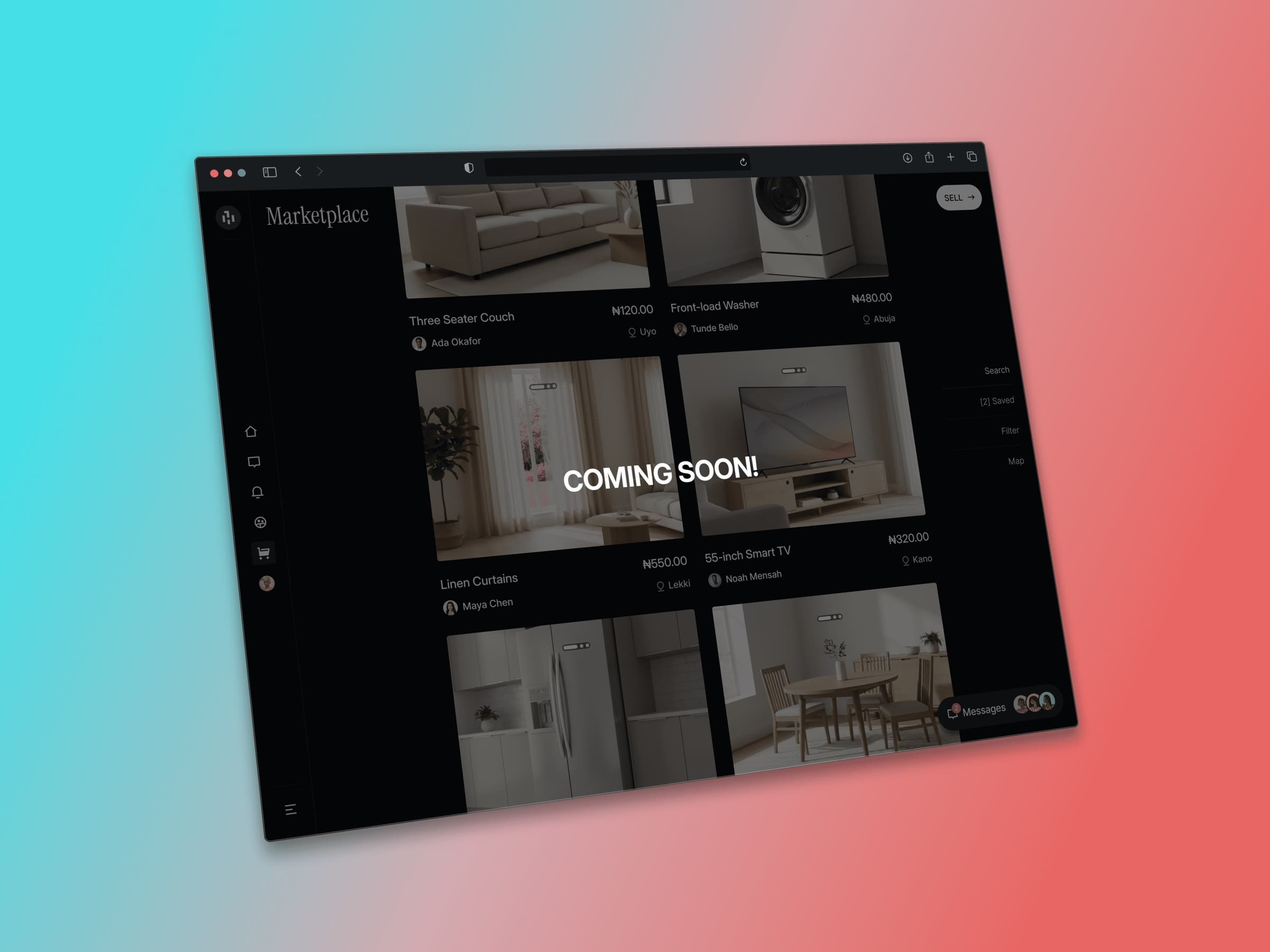
Our conversations surfaced a missing layer. People moving out want to sell furniture and appliances; people moving in want them quickly. A marketplace for both is in progress.